
1. Introduction: Is Staffing Just Another Word for Hiring?
Short answer: No. Staffing is the strategic orchestration of talent; hiring is merely the act of acquisition. While hiring brings a person into the organization, staffing in software engineering is the continuous process of aligning the right technical skills with the right project needs at the right time. It is the tactical bridge between a high-level business vision and a tangible, working product.
The stakes have never been higher. The global software market reached $737 billion in 2024 and is projected to expand to $2.25 trillion by 2034 (Precedence Research), while BLS data shows that overall employment of software developers is projected to grow 15% from 2024 to 2034 — more than three times faster than the average occupation. In this environment, engineering staffing is not an HR function. It is a competitive weapon.
The Dangerous Misconception: Filling Seats vs. Building Capability
Many organizations fall into the trap of treating software engineering staffing as a numbers game — assuming that adding more “heads” automatically equals more “output.” This is a fundamental misunderstanding rooted in a factory-era mental model of labor that simply does not apply to knowledge work.
Strategic staffing involves understanding the interconnectivity of developers. A team is an ecosystem. When you treat staffing as a simple recruitment transaction, you overlook the social friction and technical alignment required to actually ship code. You are not looking for “a Java Developer”; you are looking for a specific piece of a puzzle that must fit into a pre-existing architecture, codebase, and team culture.
The 10× Productivity Thesis: Why Staffing Is Your Engine
In software engineering, the performance gap between teams is staggering. Research consistently shows that the productivity differential between a high-performing, cohesive team and a fragmented, poorly staffed one can reach 10×. And productivity itself is becoming sharper to measure: LinearB’s 2025 benchmark report, analyzing 6.1 million pull requests from 3,000 teams across 32 countries, found that elite teams achieve sub-2-day lead times and merge 18+ PRs per engineer monthly — versus median teams at 3.8-day lead times and 12.4 PRs.
This gap is not fueled by individual “rockstar” developers. It is the product of intentional staffing. A well-staffed team minimizes communication overhead, balances seniority to mentor juniors without slowing seniors, and ensures that domain knowledge is distributed rather than siloed. Jellyfish Research’s analysis of 78,000 engineers found that innovation allocation (time on new features) increased 31% in high-performing teams while issue cycle time fell by 23%.
|
$299B+ |
Global IT Staff Augmentation Market
Valued at $299.3B in 2023, projected to reach $857.2B by 2031 — a 13.2% CAGR (Verified Market Research) |
|
85.2M |
Software Engineer Talent Shortage
Projected global shortfall of software engineers by 2030 (U.S. Department of Labor) |
|
20–35% |
AI Productivity Boost
AI-driven coding assistants improve developer productivity by 20–35%; GitHub Copilot cuts documentation time by up to 50% (Linux Foundation / GitHub) |
| Key Takeaway
If your staffing strategy is weak, your project will stall regardless of your budget. Great code is written by great teams, and great teams are built by intentional engineering staffing — not reactive headcount decisions. |
2. Hiring vs. Staffing: Are They Really the Same Thing?
No. Hiring is the process of acquisition (“The Who”), while staffing is the strategy of deployment (“The How”). Hiring focuses on the transaction of bringing an individual into the company. Staffing is the ongoing engineering function of configuring those individuals into a high-performance unit.
Recruitment: The “Who” (The Foundation)
Recruitment is the prerequisite. It involves sourcing candidates, conducting technical interviews, and onboarding. It is about finding the right raw materials. Through traditional channels, sourcing and placing an engineer takes 40–60 days on average; staffing agencies with deep networks reduce this to 2–4 weeks (South.com). The most expensive hire in the design and engineering category now costs $3,757 per hire on average (Staffing Industry Analysis).
Staffing: The “How” (The Strategy)
Once talent is in the building, staffing begins. It addresses the specific architecture of your project:
- Team Topology: Deciding team structure — e.g., “Stream-aligned” teams owning a feature end-to-end vs. “Platform” teams supporting internal tools.
- Seniority Mix: Balancing Architects (Seniors) with Engineers (Mid/Junior) to ensure the project has both long-term vision and daily momentum.
- Role Distribution: Matching an engineer’s specific strength (e.g., performance tuning or CSS architecture) to the current phase of the Software Development Life Cycle (SDLC).
- Skills Continuity: Around 58% of organizations prioritize staff augmentation for rapid access to specialized skills; 54% report improved operational efficiency as a direct result (Global Growth Insights, 2025).
The Goal: Moving from “Filling Seats” to “Building Capabilities”
The fundamental difference lies in the objective. A hiring mindset settles for filling seats — checking a box because a vacancy exists. A staffing mindset focuses on building capabilities.
| Expert Tip You don’t staff a “Java Developer” just because you have a Java project. You staff a developer with specific experience in high-concurrency financial systems because your project’s success depends on that exact capability. Specificity in staffing is specificity in outcomes. |
3. Core Staffing Models in Modern Software Engineering
Choosing the wrong staffing model is one of the most common — and most expensive — mistakes engineering managers make. Each model optimizes for different tradeoffs between speed, specialization, and ownership.
The Functional Model (Grouped by Expertise)
Teams are organized by discipline: a dedicated QA team, a backend team, a frontend team. This model creates deep specialization and expertise depth, but can create silos that slow cross-functional delivery. Best suited for large organizations with stable, well-defined product domains.
The Cross-Functional (Agile) Model
Feature-based teams containing Dev, Design, and QA in a single unit. This model is the dominant approach in high-growth product companies because it maximizes speed and ownership. Research from Jellyfish across 11,000 teams shows these structures drive the highest innovation allocation rates.
The Hybrid / Matrix Model
A balance between specialized departments (for depth) and cross-functional project teams (for delivery speed). Most common in enterprise environments managing multiple complex product lines simultaneously. Requires strong role clarity to avoid the “two masters” problem.
Staff Augmentation Engineering
Engineering staff augmentation sits as its own strategic model — bringing specialized external talent into your existing team structure for defined periods without the overhead of full-time hiring. It is the fastest-growing approach: the Staff Augmentation Services Market grew from $6.89B in 2024 to $7.35B in 2025 at a 7.11% CAGR, and is projected to reach $11.94B by 2032 (Research and Markets). Nearly 62% of enterprises adopt engineering staff augmentation services to manage dynamic workloads, while 64% of large organizations rely on it to support transformation programs.
For engineering managers evaluating global staffing options, Vietnam has emerged as the highest-value destination for staff augmentation in 2026 — combining a 530,000+ active IT workforce, costs up to 70% lower than the US or Singapore, and a government-backed technology roadmap targeting top-50 global AI R&D status by 2030. See Section 10 for a full breakdown of Vietnam’s engineering talent landscape.

4. The Science of Team Composition: Getting the “Right Mix”
The Seniority Ratio Problem
Two team compositions consistently underperform. First: a team of five seniors. Without “doers” to handle execution, seniors can fall into analysis paralysis, architectural debates, and over-engineering. Second: a team of ten juniors. Without guidance architecture, this is a recipe for technical debt accumulation and slow delivery velocity. The sweet spot depends on the project phase, but a commonly effective ratio is roughly 1 senior or lead per 3–4 mid-level engineers, with juniors added based on the mentorship bandwidth of the seniors present.
The Skills Matrix: Mapping Your Blind Spots
A skills matrix is the foundational tool for any engineering manager practising intentional staffing in software engineering. It maps every engineer against technical domains and flags Single Points of Failure (SPOFs) — areas where only one person holds critical knowledge. If that person leaves or is sick, delivery stops.
Build a matrix with rows for each team member and columns for key technical domains (backend, frontend, infrastructure, security, domain logic, etc.). Score each cell 1–4 (novice to expert). Any column with a single score ≥ 3 is a SPOF and a staffing risk to address immediately.
Generalists vs. Specialists: The T-Shaped Engineer
The most effective hire for most product teams is the T-shaped engineer: broad general knowledge across the stack, with one area of genuine depth. They can fill gaps when needed but still own a specialty. Full-stack developers are particularly valued by lean teams: startups and remote teams rely on them to move fast without growing headcount, handling entire features end-to-end (Lemon.io, 2025).
5. Overcoming the “Brooks’ Law” Trap
One of the most cited — and most violated — principles in software project management: “Adding manpower to a late software project makes it later.” Fred Brooks Jr. coined this observation in his landmark 1975 book The Mythical Man-Month, based on painful first-hand experience managing the IBM OS/360 project. Five decades later, it remains empirically validated.
Why Adding People Backfires
- Communication overhead: Each new member adds N-1 new communication channels. A team of 5 has 10 possible channels. A team of 10 has 45. Coordination cost grows nonlinearly.
- Onboarding cost: New members consume existing team members’ time for training and codebase walkthroughs — pulling senior engineers away from delivery during a period already under pressure.
- Integration complexity: New contributors are more likely to introduce bugs in code they don’t deeply understand, often requiring more review cycles than they save in output.
The Strategic Solution: Modular Staffing
The antidote is not to avoid growth — it is to plan for it. Staffing research confirms that if resources are added early enough and to well-modularized tasks, projects can be saved rather than slowed. Three practical approaches:
- Front-load staffing decisions: Make team composition decisions before project kickoff, not mid-sprint. Early additions have time to onboard and contribute meaningfully.
- Modularize before you scale: Break the codebase into independently ownable modules so new members can contribute to a defined surface area without needing full-system context.
• Prefer augmentation over rotation: Engineering staff augmentation services allow you to add specialists with domain-specific context who can contribute faster than a general hire learning a new stack.
| Warning Sign If your first instinct to a slipping deadline is to “add more engineers,” pause. Ask first: Is the task modular enough? Is there documented context for rapid onboarding? If not, adding headcount will cost you more than it saves. |
6. Staffing Trends for 2025: The AI & Remote Shift
AI-Augmented Engineering: Changing the Headcount Math
AI-driven coding assistants have attracted nearly $1 billion in funding since early 2023, and the productivity data is arriving. Google’s internal trials showed a 21% reduction in time on complex coding tasks with AI assistance. GitHub Copilot cut documentation time by up to 50%. ActivTrak’s 2025 State of the Workplace report found productive time grew 2% industry-wide, with the average productive session increasing by 20%.
Teams leveraging AI tools effectively see 30–40% improvements in cycle time metrics (Worklytics, 2025). However, gains are not evenly distributed. Teams without proper AI adoption strategies experience productivity declines due to increased context switching. This means the staffing question is no longer just “how many engineers?” but “how many AI-fluent engineers?” Gartner predicts that through 2027, 80% of engineering teams will need to upskill to keep up with GenAI adoption.
Net hiring effect remains positive: the Linux Foundation’s 2025 Tech Talent Report found 19% of organizations increased hiring because of generative AI vs. 14% downsizing. The projected net hiring effect is expected to expand from 18% in 2024 to 23% by 2026, with McKinsey predicting a 23% surge in STEM job demand by 2025.
|
80% |
Gartner GenAI Upskilling
Of engineering teams will need upskilling to match GenAI workflows by 2027 |
|
84% |
AI Soft Skills Impact
Of managers and HR leaders say soft skills are as critical as technical skills in augmented teams (Forbes) |
Fractional Staffing: High-Level Expertise, Part-Time
A fast-growing trend in engineering staff augmentation: the fractional CTO, fractional architect, or fractional engineering lead. Organizations that need senior strategic guidance — but cannot justify or afford a full-time executive hire — bring in experienced leaders on a defined-hour engagement. This model is especially common in Series A/B startups and in digital transformation programs at legacy enterprises.
The Global Talent Cloud: Remote as a Staffing Strategy
Remote software engineers are equally or more productive than their in-office counterparts when equipped with the right tooling, communication norms, and timezone overlap (South.com research). This opens a genuinely global talent pool — and creates genuine staffing complexity. Key considerations for engineering staffing software and remote team management:
- Timezone windows: Define “core overlap hours” where all critical members are synchronously reachable. 3–4 hours of daily overlap is typically sufficient for sprint ceremonies and code review.
- Asynchronous communication infrastructure: Engineers with 4+ hours of daily focus time consistently outperform those with fragmented schedules. Remote staffing done well protects focus time; remote staffing done poorly fragments it (Clockwise research across 80,000 engineers).
- Cultural alignment: Cultural fit and communication style are now explicitly weighted in staff augmentation engineering selection, with 84% of managers treating soft skills as equal in importance to technical credentials.
7. Best Practices for Software Engineering Managers (EMs)

Treat Staffing as a Continuous Process
Staffing in software engineering is not a one-time event at project kickoff. It is an ongoing management responsibility. As the project evolves through SDLC phases, the optimal team composition shifts. The skills required during architecture design differ from those needed during performance optimization or production hardening. Review team composition at each major phase transition.
Build a Succession Plan Before You Need One
For every critical role — lead engineer, domain expert, infrastructure owner — you should always know who is next in line. The skills matrix built in Section 4 makes this visible. Single Points of Failure in your skills matrix are also single points of failure in your succession plan. Address them through documentation, pair programming, and intentional knowledge transfer.
Use Staff Augmentation to Bridge, Not Substitute
Engineering staff augmentation services are most effective when used to fill specific, bounded capability gaps — not as a permanent substitute for core team building. Use augmentation to:
- Accelerate a phase that requires a temporary specialty (e.g., a security audit before launch)
- Cover a skill gap while a junior engineer is being upskilled internally
- Scale delivery capacity during a sprint peak without permanent headcount overhead
- Bring in architectural leadership during product pivots or platform migrations
Align Staffing to Individual Growth Goals
Retention through staffing is one of the most underused levers in engineering management. When engineers feel their project assignments align with their career development, engagement rises and attrition falls. Organizations offering continuous learning and development are more attractive to candidates and retain engineers longer (Radancy, 2025). Before assigning someone to a project, understand what skills they want to build. Then staff projects deliberately so your best engineers grow into the assignments you need from them in 12 months.
8. The View Ahead: Engineering Staffing Predictions 2026–2030
The forces reshaping software engineering staffing are not slowing down. They are accelerating. For engineering managers, CTOs, and HR leaders making workforce decisions today, understanding what the next 3–5 years will look like is not optional — it is strategic necessity. Here is what the data and expert forecasts indicate.
2026: The Year of the Hybrid Workforce Baseline
By 2026, most engineering organizations are already running a hybrid workforce model — full-time employees, augmented talent, and contractors operating in parallel. Robert Half’s 2026 Demand for Skilled Talent report puts the gap starkly: 87% of tech leaders are optimistic about the year ahead and 61% are planning headcount growth — yet 65% report that finding qualified talent is harder than a year ago, and only 7% say they have the skills in-house to execute their most critical projects.
The skills bar is rising sharply. What’s changing in 2026 is not the volume of engineering work — it is the specificity of what’s required. Security, cloud-native architecture, and ML integration roles face the sharpest shortages. Companies like Meta, Netflix, Uber, and Google are hiring engineers faster than engineers are leaving; their hiring ratios sit well above 100%, signaling that engineering work inside these organizations is increasing, not shrinking (SignalFire, 2025).
AI coding assistants are simultaneously raising the productivity ceiling and raising the skill floor. Gartner’s 2026 strategic predictions warn that atrophy of critical-thinking skills due to GenAI use will push 50% of organizations to require “AI-free” skills assessments by 2026 — a direct signal that the hiring criteria for software engineers are fundamentally changing.
2027: The AI-Fluency Mandate
Gartner’s headline prediction for 2027: 80% of software engineers will need to upskill in AI-assisted development tools to remain competitive. McKinsey reports AI coding assistants now lift productivity by 20–45% on routine tasks — but those gains only flow to engineers who can critically review, architect around, and strategically direct AI output. The engineer who cannot is actively becoming a bottleneck.
For staffing strategy, this has two implications. First, your hiring criteria must evolve: technical depth + AI fluency becomes the new baseline for mid-to-senior roles. Second, retention strategy must include AI upskilling pathways — the World Economic Forum projects that 59% of the global workforce will need retraining by 2030, and organizations that treat learning as a core business function (not an HR afterthought) will win the retention competition.
On the infrastructure side: by 2027, 50% of critical applications will run outside centralized clouds (Gartner), driving surging demand for edge computing engineers and cloud-native architects. Global IT spending on digital transformation will approach USD 4 trillion by 2027 (IDC) — and every dollar of that requires someone to design, build, and maintain it.
For Vietnam specifically: Vietnam targets self-reliance in semiconductor chip design, manufacturing, and testing by no later than 2027. FPT’s first advanced semiconductor testing and packaging plant in Bac Ninh province is set to become operational in 2027 — Phase 1 covering 1,600 sq.m of functional and reliability testing. These infrastructure milestones will accelerate demand for specialized engineering talent in Vietnam’s domestic market.
→ Read more: Gartner Strategic Predictions 2027 — Gartner
2028–2030: The Great Talent Rebalancing
The macro trajectory through 2030 is a structural talent rebalancing between geographies, skill levels, and employment models. Three forces will dominate:
- The Global Talent Shortage Peaks: The global shortfall of software engineers is forecast to reach 85.2 million by 2030 (U.S. Department of Labor). No single country or model will close this gap alone. The organizations with the most sophisticated global staffing strategies — blending domestic hires, nearshore augmentation, and offshore teams — will have a decisive structural advantage over those relying on a single hiring channel.
- AI Creates More Engineering Work Than It Eliminates: The World Economic Forum projects that by 2030, 170 million new roles will be created and 92 million displaced — a net gain of 78 million positions. The fastest-growing roles are in technology, data, and AI. AI is transforming work more than eliminating it. McKinsey’s generative AI models predict the technology could add between USD 2.6 and 4.4 trillion annually to the global economy, all of which requires software engineers to build and maintain.
- Specialist Demand Reaches Critical Mass: Demand for AI personnel globally is forecast to surge 74% between 2025 and 2030 (Second Talent, 2025). In Vietnam specifically, this translates to a target of 8,000 dedicated AI graduates per year by 2030 and a national semiconductor workforce of 50,000 chip design engineers — up from approximately 15,000 today. The gap between supply and demand for senior AI/ML engineers and semiconductor specialists will be the defining staffing challenge of the decade.
- Vietnam Becomes a Top-Tier Global Engineering Hub: Vietnam’s semiconductor market is projected to reach USD 31.28 billion by 2027 at an 11.6% CAGR. The country targets ranking among the top 3 in Southeast Asia and top 50 globally in AI R&D by 2030 (Resolution 57-NQ/TW). A 46.47% CAGR for Vietnam’s Generative AI segment between 2024 and 2030 is among the highest sector-specific growth forecasts in Southeast Asia. Companies that establish their Vietnam engineering presence now — before the talent competition intensifies — will have first-mover advantage in one of the world’s fastest-growing tech ecosystems.
|
170M |
New Roles Created by AI (by 2030)
World Economic Forum: 170 million new roles created, 92 million displaced — net gain of 78 million jobs |
|
+74% |
AI Demand Surge (2025–2030)
Demand for AI personnel forecast to surge 74% globally by 2030 (Second Talent 2025 Workforce Report) |
|
46.47% CAGR |
Vietnam GenAI Growth
Vietnam’s Generative AI segment CAGR 2024–2030 — among the highest sector-specific forecasts in Southeast Asia |
|
~USD 4T |
Global Digital Transformation Spend
IDC projects worldwide digital transformation spending approaching USD 4 trillion by 2027 |
| What This Means for Your Staffing Strategy
The engineering staffing decisions you make in 2025–2026 will compound through 2030. Teams built with AI-fluency requirements, global talent access, and intentional seniority mix will have a 3–5x advantage over reactive hirers by decade’s end. The window to build those structures affordably — before talent competition peaks — is now. |
→ Read more: Tech Forecast 2026–2030 — StartUs Insights
| Build Your Future Engineering Team Today
Don’t let talent gaps define your 2026 roadmap. Reco connects you with top Vietnamese IT talent — in as little as 7 days. |
9. Conclusion: Strategic Staffing as a Competitive Advantage
Great code is written by great teams. Great teams are built by intentional staffing — not reactive headcount decisions, not seat-filling, and not blind trust in the “more people = more output” fallacy.
The data is clear: the global shortage of software engineers may reach 85.2 million by 2030, talent competition is intensifying, AI is reshaping the productivity baseline, and the organizations that will win are those that treat engineering staffing as a continuous strategic function rather than an annual HR event.
Whether your strategy involves building internal cross-functional teams, deploying fractional leadership, tapping the global talent cloud, or using engineering staff augmentation services to close capability gaps fast — the principles are the same: understand your team’s composition deeply, align talent to project needs precisely, and staff for growth, not just delivery.
| Final Word
The best engineering managers know their team’s skills matrix by heart, have a succession plan for every critical role, and are never surprised by a staffing gap. If you have the strategy but lack the people, a trusted engineering staff augmentation partner can help you scale your vision without compromising the team culture and technical quality you have built. |
10. Software Engineering Staffing in Vietnam: The Emerging Global Hub
For engineering managers and CTOs seeking to scale their teams cost-effectively without compromising on quality, Vietnam has rapidly moved from an emerging consideration to a top-tier global staffing destination. Vietnam is now firmly positioned among the top 7 global software outsourcing destinations and holds the third spot in Southeast Asia — and the data behind this rise is compelling.
Vietnam’s IT Talent Landscape: By the Numbers
|
530,000+ |
Vietnam IT Workforce
Active IT professionals, with ~50,000–60,000 new graduates entering the market annually (TopDev Vietnam IT Market Report 2025) |
|
$2.37B → $4.39B |
Vietnam IT Services Market
Growing from $2.37B in 2025 to $4.39B by 2031 at a 10.82% CAGR (Mordor Intelligence) |
|
150,000–200,000 |
Annual Talent Shortfall
Vietnam faces a structural shortage of 150,000–200,000 engineers per year, fueling demand for strategic staffing partners |
|
Up to 70% savings |
Cost Advantage
Vietnam software rates are 30–40% lower than India and China, and up to 70% lower than the U.S. or Singapore — with equivalent quality |
Why Global Companies Are Choosing Vietnam
The appeal of Vietnam extends well beyond cost. Several structural advantages make it one of the most strategically sound staffing decisions for 2025 and beyond:
- Young, growing talent base: 56% of IT professionals are between 20–29 years old. The workforce is expanding rapidly, with 530,000 active engineers and growing. The most in-demand roles are Web Developers (45%), Back-end Developers (37.4%), and AI Engineers (30%).
- Government-backed ICT growth: Vietnam’s tech sector contributes approximately 15% to GDP — triple what it was a decade ago — with the government targeting a 20% digital GDP contribution by 2025 and 30% by 2030. The ICT sector is growing at nearly 10% CAGR.
- Preferred partner for Japan, South Korea, and the US: Japan is expected to face a 600,000-person IT shortfall by 2030; South Korea faces 10,000+ AI talent shortages today. Vietnam has emerged as the primary outsourcing partner for these markets, offering cultural compatibility, technical depth, and favorable time zone overlap.
- Competitive salary ranges: Junior developers earn $500–$1,000/month; Senior developers earn $1,500–$2,500+/month. Senior architects and directors command $1,995–$2,590/month. These figures are significantly competitive versus equivalent roles in Singapore ($67,560 median annual for senior engineers vs. $36,870 in Vietnam — a 45% cost differential).
- Rapidly improving English proficiency: Rising salary premiums for English-proficient developers are accelerating language capability across the market. Many agencies now filter specifically for Intermediate (B1) English or above as a baseline requirement.
- Strong government regulatory environment: A sweeping series of 2025 reforms — including the Digital-First Administration strategy and the fintech regulatory sandbox under Decree 94/2025 — has significantly reduced business complexity for foreign companies operating in Vietnam.
The Vietnam Staffing Landscape: Key Considerations
Despite its strengths, staffing in Vietnam does require navigating local nuances. Engineering managers entering this market for the first time should be prepared for:
- Passive candidate pools: The best Vietnamese developers are rarely active on job boards. They are currently employed and not actively looking. Accessing them requires either a specialized staffing partner with deep networks or a sustained employer brand presence in the local market.
- Skills matrix gaps: Only about 30% of graduates possess the practical skills required for key roles immediately upon entering the market. Effective staffing in Vietnam therefore includes an intentional assessment layer — technical screening before a CV ever reaches a hiring manager’s desk.
- Compliance complexity: Vietnam’s Labor Code, Personal Income Tax (PIT) regulations, and social insurance requirements create a significant administrative layer for foreign companies without a local entity. Employer of Record (EOR) arrangements are frequently the right entry model, allowing foreign teams to hire compliantly without incorporating locally.
- Cultural fit alongside technical skill: Work culture in Vietnam places significant emphasis on team hierarchy, respect for seniority, and team cohesion. Staffing partners who understand this cultural dimension and screen for it produce better long-term retention outcomes.
| Strategic Insight
Vietnam is not just a low-cost alternative. It is a high-quality, strategically located, government-backed talent ecosystem that is actively being upgraded for the AI era. NVIDIA’s planned AI R&D hub and Google’s evaluation of a greenfield cloud region signal long-term confidence in Vietnam’s technology trajectory. |
11. Reco: Vietnam’s IT Manpower Ecosystem
For companies looking to tap into Vietnam’s engineering talent — whether they are a global MNC, a regional APAC firm, or a fast-growing startup — Reco is one of Vietnam’s leading IT HR solution providers, purpose-built to bridge the gap between international business demand and Vietnam’s growing technical workforce.
Reco’s mission is clear: to position Vietnamese businesses prominently on the global technology map and to facilitate foreign corporations in accessing high-quality IT talent in Vietnam. Operating from its headquarters in Hanoi, with a branch in Ho Chi Minh City and an international office in Tokyo, Reco serves clients across BFSI, e-commerce, SaaS, and technology-driven industries.
How Reco Works: The Service Ecosystem
Reco offers a comprehensive suite of HR solutions tailored specifically to the IT sector — covering the full talent lifecycle from sourcing through compliance and long-term team management:
| RECO 7
Headhunt |
Fast-track headhunting in 7 days
Reco’s flagship recruitment service delivers qualified IT candidates within 7 days of receiving a job request — covering a 3-step process: Introducing → Interviewing → Hiring. Candidates match up to 95% of hiring requirements. The service is warranted for 2 months post-placement. Ideal for: companies needing to fill urgent vacancies, expand team size rapidly, or replace departing talent without disrupting delivery. |
| RECO Staffing | Engineering staff augmentation (Employer of Record)
Reco provides high-quality augmented engineers for short- or long-term engagements, acting as the Employer of Record (EOR). Reco manages employment contracts, payroll, social insurance, and full Vietnamese labor law compliance — while the engineers report directly to and integrate with the client’s team. Ideal for: global companies needing to add specialized Vietnamese talent quickly without a local legal entity. |
| B.O.T
Build-Operate-Transfer |
Low-risk offshore team ownership
Reco builds and operates a dedicated offshore engineering team in Vietnam, then transfers full ownership to the client after 2–3 years. The client maintains complete authority over workflows, technical standards, and team culture throughout. Ideal for: companies seeking long-term offshore engineering capacity without the upfront cost and complexity of setting up a Vietnamese legal entity. |
| EOR & Payroll | Full compliance, zero entity setup
Reco acts as the legal employer in Vietnam, managing employment contracts, PIT tax filings, social and health insurance, payroll disbursement, and government compliance reporting. Supports both local Vietnamese hires and the placement of foreign engineers in Vietnam (visas, work permits, expat contracts). Ideal for: any company hiring in Vietnam without a local subsidiary. |
| HR
Outsourcing |
End-to-end HR management
Reco’s HR experts (10–15 years of local experience) manage the full employee lifecycle on the client’s behalf: recruitment, onboarding, probation tracking, performance coordination, contract renewal, offboarding, and compliance reporting. Reco’s network spans 330,000+ IT candidates, enabling role fills as fast as 7 days. Ideal for: growing companies that want to stay lean on internal HR overhead while scaling their engineering teams in Vietnam. |
12. Reco in Action: Real-World Staffing Case Studies
The following case studies illustrate how Reco’s engineering staff augmentation services and HR solutions address real staffing challenges faced by companies operating in — or expanding into — Vietnam. Each case reflects a different use of Reco’s service ecosystem.
| CASE STUDY — APAC Market Expansion: Remote Team via EOR, No Legal Entity |
| Challenge
An APAC-facing company needed customer service and IT remote staff based in Vietnam to support regional customers. They had no local legal entity and needed to move quickly – establishing a Vietnamese subsidiary would have taken months and introduced significant regulatory complexity. Reco’s Approach Reco deployed its Staffing (EOR) model. Reco employed local Vietnamese talents under the Employer of Record framework – managing payroll, labor contracts, social insurance contributions, and full compliance with Vietnamese labor regulations. The client’s engineering and operations leaders retained direct management control over the team’s day-to-day work and deliverables. Outcome A team of 10 IT remote staff was built and operational within 1 month – with smooth ongoing operations, zero entity setup costs, and no legal or compliance risk. The client was able to test and establish its Vietnam presence before committing to a permanent local structure. |
Why Partner with Reco for Engineering Staffing in Vietnam
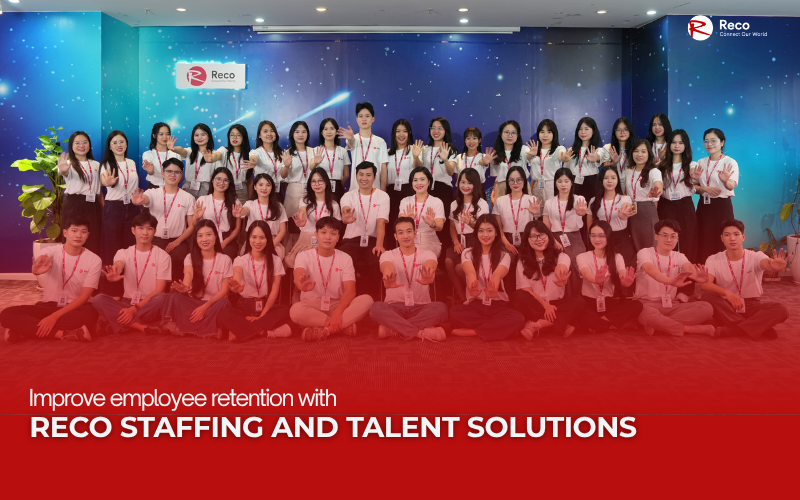
- Speed: Qualified IT candidates delivered in 7 days. Full remote teams built in 2–4 weeks.
- Depth: Access to a network of 330,000+ IT candidates across Vietnam’s major tech hubs — Hanoi, Ho Chi Minh City, and Da Nang.
- Compliance: Full Employer of Record coverage: payroll, PIT, social insurance, labor contracts, and government reporting — for both local and expat hires.
- Flexibility: Services scale from a single headhunt placement to full-team augmentation, BOT offshore team builds, and comprehensive HR outsourcing.
- Industry specialization: Deep focus on the IT and software engineering sector across BFSI, e-commerce, SaaS, and digital transformation verticals.
- • Global reach, local expertise: Offices in Hanoi, Ho Chi Minh City, and Tokyo. Built for companies scaling across the APAC region.
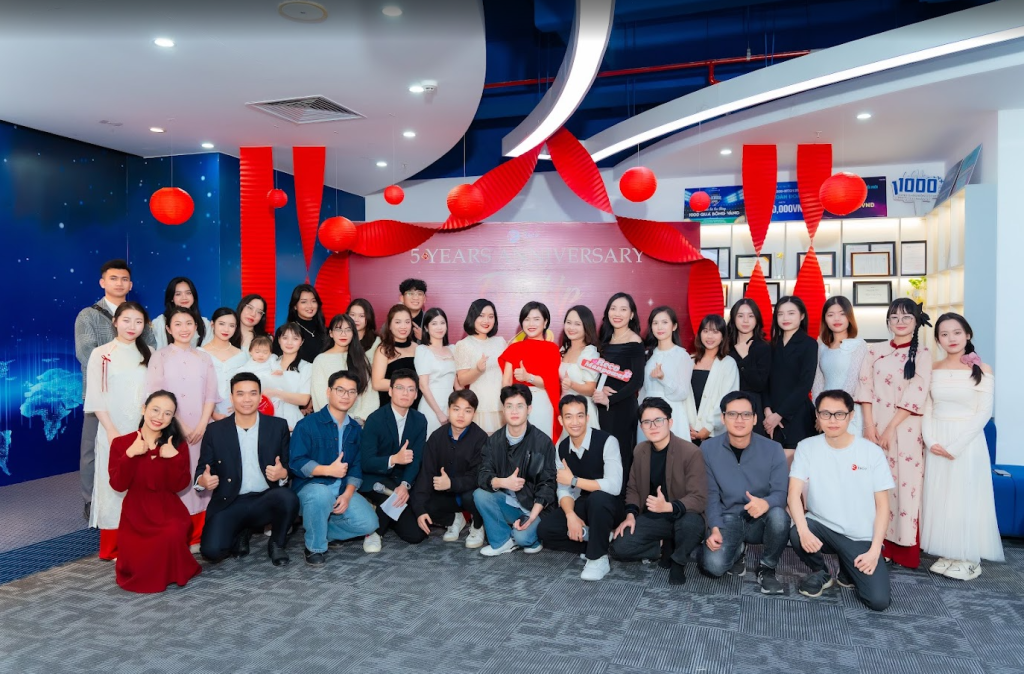
Looking to hire reliable and highly qualified tech professionals in Vietnam? Reach out to Reco Manpower today for tailored recruitment solutions that match your business needs.
FAQs
Not necessarily. According to Brooks’ Law, adding manpower to a late software project can actually make it later due to the “ramp-up” time and increased communication overhead. Successful staffing in 2026 relies on modularizing tasks so that new engineers can contribute immediately without needing to understand the entire legacy codebase.
Modern engineering staffing software uses AI to analyze your current team’s velocity and skill gaps. It helps managers predict when a project will need more resources and identifies the exact seniority mix required. Instead of guessing, you use data to ensure no developer is over-allocated or under-utilized.
Hybrid teams often experience uneven workplace morale, where some employees feel more connected than others.
Quality is maintained through strict engineering leadership and standardized processes. By using automated CI/CD pipelines, mandatory code reviews, and clearly defined “Definition of Done,” augmented staff can integrate into your workflow while maintaining your company’s high technical standards.