
Where Is Vietnam’s Healthtech Market Today?
Vietnam’s digital health market was valued at $398 million in 2024 and is projected to grow at a CAGR of 11.45% through 2030.
At the same time, the broader private healthcare market is forecast by FiinResearch to grow at 7.5% CAGR from 2025 to 2030.
What’s driving this wave?
- A Strong Influx of FDI As of mid-2024, Vietnam recorded approximately 160 FDI projects in healthcare and pharmaceuticals, with total registered capital of nearly $1.8 billion USD. In the first half of 2024 alone, medtech and medical device projects attracted over $200 million in new FDI, primarily from South Korea, Singapore, Japan, and China.
- Pressure on Public Hospital Infrastructure With over 100 million people served by only around 1,645 hospitals nationwide (384 of which are private), the strain on public facilities is creating enormous demand for telehealth, remote consultation, and digital pharmacy solutions.
- Mandatory EHR Policy — The Trigger No One Is Talking About This is the most underreported driver in market analyses: under Decision 749/QĐ-TTg, all healthcare facilities in Vietnam are required to implement Electronic Health Records (EHR) by 2025–2026. This creates unavoidable B2B demand for health IT solutions — from hospital management software to patient data integration systems. ¹
To support this mandate, the Government has committed a budget of up to VND 30,000 billion (~$1.26 billion USD) to accelerate healthcare digitization.
- Young Population and High Smartphone Penetration With over 50% of the population under 35, Vietnam has a user base ready for digital health applications. Post-COVID-19, nearly half of Vietnamese consumers said they planned to increase spending on personal health in the following 12 months.
Vietnam’s Healthtech Stack: Where Is IT Demand Actually Coming From?

Understanding the ecosystem by layer — not just by company name — makes it easier to see where hiring demand is concentrated and why.
Layer 1 — Infrastructure & Hospital Systems The foundation of the digital health stack. This includes Hospital Information Systems (HIS), Electronic Health Records (EHR), and interoperability platforms connecting labs, pharmacies, and clinical departments. With the government’s 2025–2026 EHR mandate now in effect, this layer is where the most immediate and non-negotiable IT demand exists — driven by thousands of hospitals and clinics that need to comply. Major players here include FPT (FPT.eHospital) and VNPT, alongside a growing number of international vendors entering the market.
Layer 2 — Clinical & Diagnostic Tools AI-assisted diagnostics, medical imaging analysis, and clinical decision support systems. This is the highest-skill segment of the stack, dominated by deep tech companies like VinBrain AI (X-ray and CT scan analysis) and international medtech firms. Demand is concentrated in AI/ML Engineers, Data Scientists, and specialists with experience in DICOM and medical imaging pipelines.
Layer 3 — Consumer & Telehealth Platforms Patient-facing applications for remote consultations, appointment booking, and prescription management. Companies like Jio Health ($27.7M raised), Medigo, eDoctor/Med247, and Docosan operate in this layer. IT demand here skews toward Mobile Developers, Backend Engineers, and Product Managers who understand consumer behavior in a regulated context.
Layer 4 — Healthcare Commerce & Supply Chain B2B platforms digitizing pharmaceutical distribution and medical supply chains. BuyMed (Thuocsi.vn), with $51.5M in Series B funding, is the standout in this layer — connecting manufacturers, distributors, and pharmacies through a single digital platform. IT needs here include Backend Engineers, Data Engineers, and logistics-oriented systems architects.
Each layer has a distinct hiring profile. The infrastructure layer needs compliance-aware engineers. The clinical layer needs deep AI expertise. The consumer layer needs product-minded builders. The commerce layer needs engineers comfortable with high-transaction, supply chain complexity. This is why a one-size-fits-all recruitment approach rarely works in healthtech.
The Most In-Demand IT Roles in Healthtech
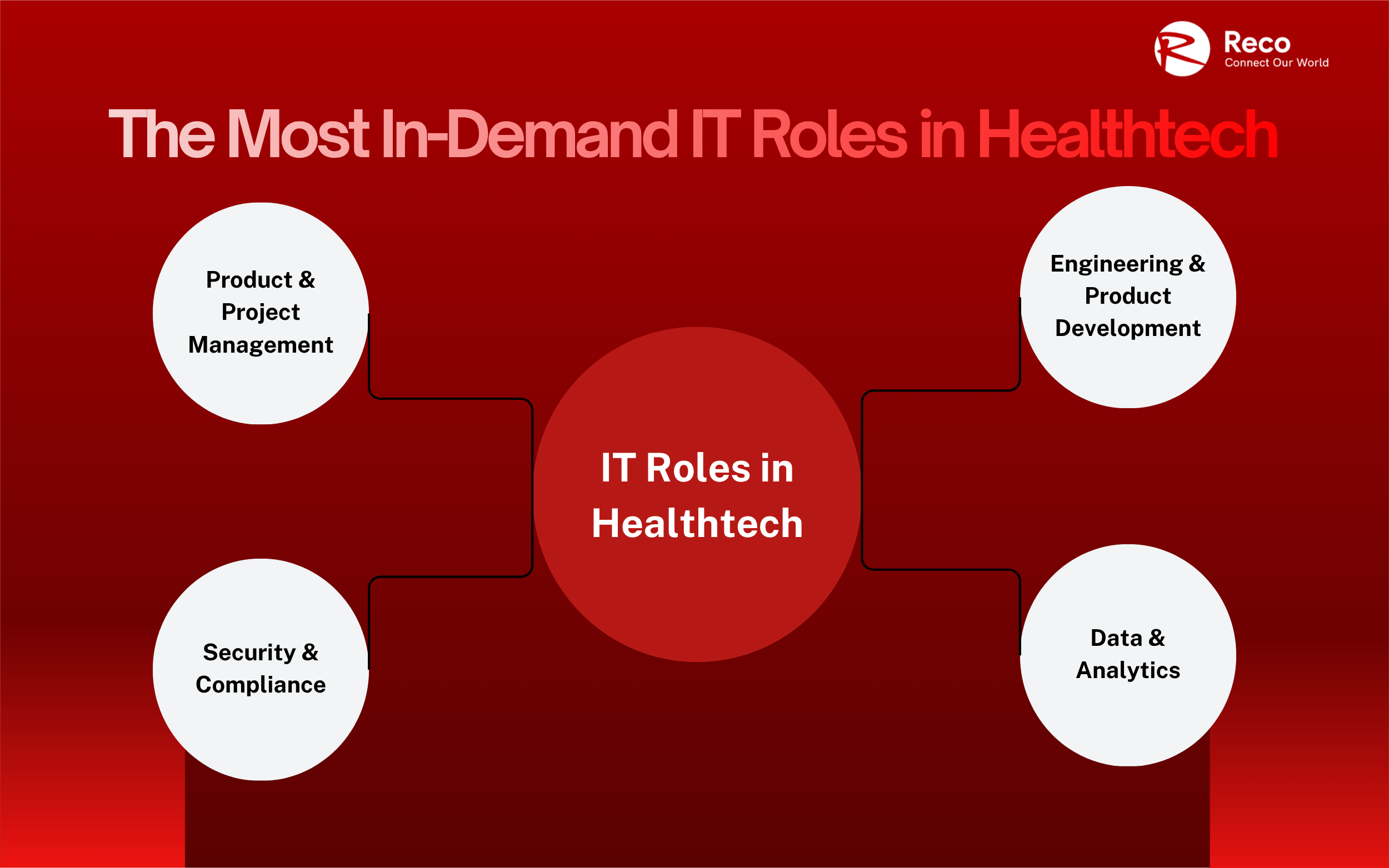
Digital transformation in healthcare requires far more than developers. Here is the full talent picture that healthcare organizations are looking for:
Engineering & Product Development
Backend / Full-stack Developer (Healthcare Domain) Building HIS (Hospital Information Systems), EHR platforms, and APIs connecting medical devices. Knowledge of HL7/FHIR standards is a significant competitive advantage.
Mobile Developer (iOS/Android) Developing patient-facing apps, remote monitoring applications, and digital prescription management tools.
DevOps / Cloud Engineer Ensuring infrastructure meets the security requirements of medical data (data encryption, secure architecture).
AI/ML Engineer Building AI models for medical imaging (X-ray, MRI), patient risk prediction, and hospital workflow optimization.
Data & Analytics
Data Engineer / Data Analyst Building data pipelines from medical devices, EHR systems, and lab results. Analyzing patient outcomes and clinical KPIs.
Business Intelligence Analyst Delivering dashboards for hospital leadership, compliance reporting, and treatment cost analysis.
Product & Project Management
Product Manager / Product Owner Leading product roadmaps for both B2C (patient apps) and B2B (clinic management software) healthtech products. Clinical workflow knowledge is a strong plus.
Business Analyst Bridging the gap between technical teams and healthcare stakeholders — doctors, hospital administrators, and regulatory bodies.
IT Project Manager Overseeing EHR and HIS deployments across hospitals and clinics — complex projects requiring multi-stakeholder management.
Security & Compliance
Security Engineer / Information Security Specialist Protecting patient data against increasingly strict legal requirements. This role is severely undersupplied across the entire market.
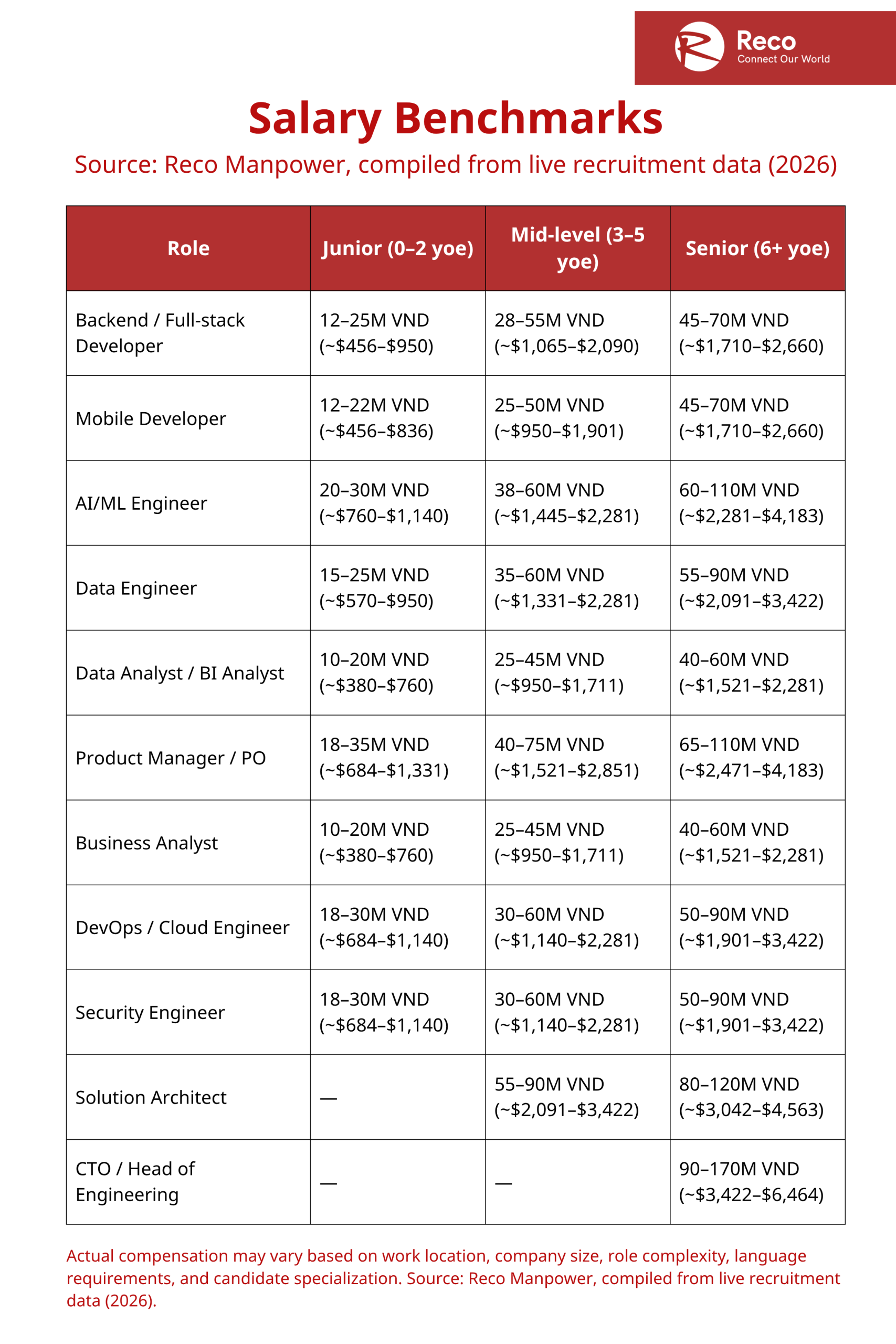
Salary Benchmarks
The following is a reference benchmark for IT roles in the healthtech sector, compiled from real recruitment data by Reco’s specialist consultants.
Why Is Hiring IT Talent for Healthtech So Difficult?
- The Rare Intersection of IT and Healthcare Domain Knowledge Pure IT talent is abundant — but candidates who combine technical skills with an understanding of clinical workflows are extremely scarce. Those who have both are typically contested aggressively across multiple offers.
- Direct Competition with Fintech and E-commerce Both sectors offer high salaries and have well-established employer brands. Healthtech companies need a more proactive approach to talent attraction and employer branding.
- Complex Compliance Requirements Hiring IT for healthcare projects requires simultaneous compliance with labor law, data privacy regulations, and industry-specific healthcare requirements — a challenge faced by both domestic companies and foreign companies without a legal entity in Vietnam.
- Long Time-to-Hire Without an Existing Network For specialized roles such as AI Engineer for medical imaging or Healthcare IT PM, a standard recruitment process can stretch to 2–3 months — far too slow when facing EHR mandates or funding milestones.
How Reco Can Help
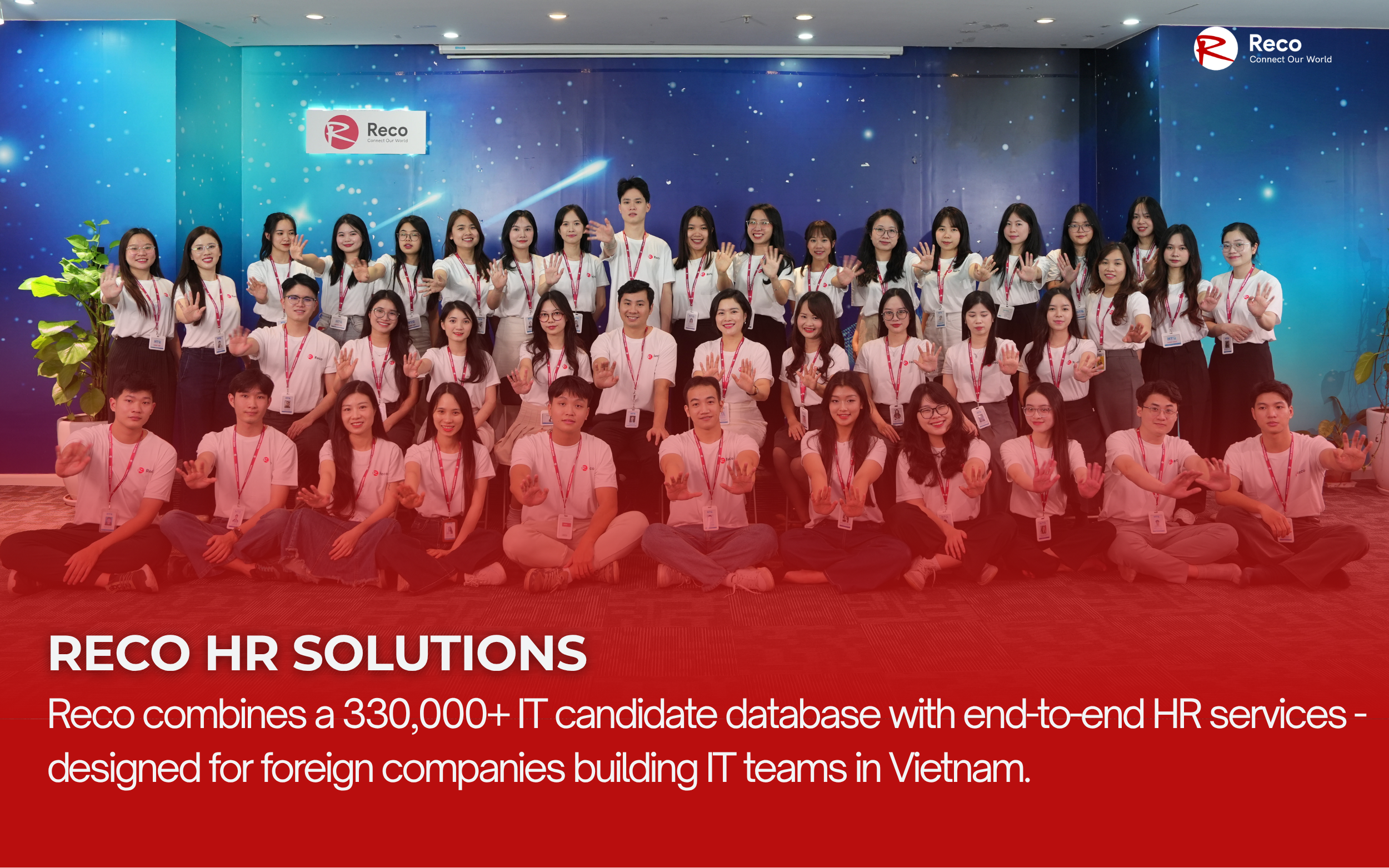
Reco serves both domestic companies and foreign organizations — from Vietnamese healthtech startups scaling quickly, to Singapore, Japanese, and Australian enterprises looking to build IT teams in Vietnam without setting up a legal entity.
Hiring IT for healthtech is fundamentally different from standard IT recruitment: you need people who are technically strong, capable of working in a high-compliance environment, and able to onboard fast enough to keep pace with your product roadmap. This is precisely where Reco’s solutions are built to deliver.
RECO 7 — Candidates Proposed Within 7 Days
Healthtech runs on deadlines — EHR mandates, product launches, funding milestones. A 2–3 month hiring process is a genuine business risk.
RECO 7 compresses the full recruitment cycle to 7 working days from first brief to shortlist: Reco proposes candidates → Client interviews → Hire. With a database of 330,000+ IT candidates, roles such as Backend Developer, Data Engineer, or Product Manager can be matched immediately without waiting for job postings to generate inbound applications.
EOR (Employer of Record) — No Legal Entity Required in Vietnam
For companies in Singapore, Japan, and Australia looking to build IT teams in Vietnam for healthtech projects, establishing a local entity can take months and require significant legal resources.
Through Reco’s EOR service, Reco acts as the legal employer on your behalf — managing employment contracts, taxes, and social insurance in full compliance with Vietnamese law — while your IT team operates entirely under your direction. Ideal for companies looking to test the market or scale quickly before committing to a permanent local office.
Staff Augmentation — Flexible Scaling by Project Phase
Healthtech demand is often cyclical: peak during EHR deployments, lower post-go-live. Staff Augmentation allows you to add IT talent precisely when you need it — three Backend Developers this month, a Data Engineer next quarter — without locking in fixed headcount long-term.
BOT (Build–Operate–Transfer) — For Long-Term Team Ownership
If the goal is building a dedicated offshore IT team for your healthtech product, BOT offers the most structured path: Reco Builds a team to your specifications, Operates it with clear KPIs and ongoing coaching, then Transfers full ownership to you when you’re ready. Best suited for companies with a long-term roadmap in the Vietnamese market.
Conclusion
Vietnam’s healthtech market is at an inflection point. Mandatory EHR policy, accelerating FDI, and a digitally-ready population are together creating unprecedented demand for IT talent in healthcare.
Winning this race is not just a matter of budget. The real competitive advantage is speed — finding the right person, at the right time.

Looking to hire reliable and highly qualified tech professionals in Vietnam? Reach out to Reco Manpower today for tailored recruitment solutions that match your business needs.
FAQs
Healthtech is the use of digital technology and software to improve healthcare delivery — covering telemedicine, EHR, AI diagnostics, hospital management systems, and health data analytics.
Standard hiring takes 2–3 months for specialized roles. Through Reco’s RECO 7 service, shortlisted candidates are proposed within 7 working days.
Yes. Reco filters from a 330,000+ candidate database by domain background, prioritizing candidates with prior experience at healthtech companies or EHR/HIS implementation projects.