

1. What Is Work Morale?
1.1. Understanding Work Morale in the Workplace
Work morale refers to the overall attitude and emotional state employees have toward their work environment, their team, and their responsibilities.
It is shaped by multiple factors, including leadership, communication, workload, and growth opportunities. Unlike short-term motivation, work morale reflects a more stable, long-term sentiment that influences how employees behave every day.
In a workplace with strong morale, employees tend to be proactive, collaborative, and willing to go beyond their basic responsibilities. When morale is low, however, engagement drops, and work becomes purely transactional.
1.2. Work Morale vs Employee Morale
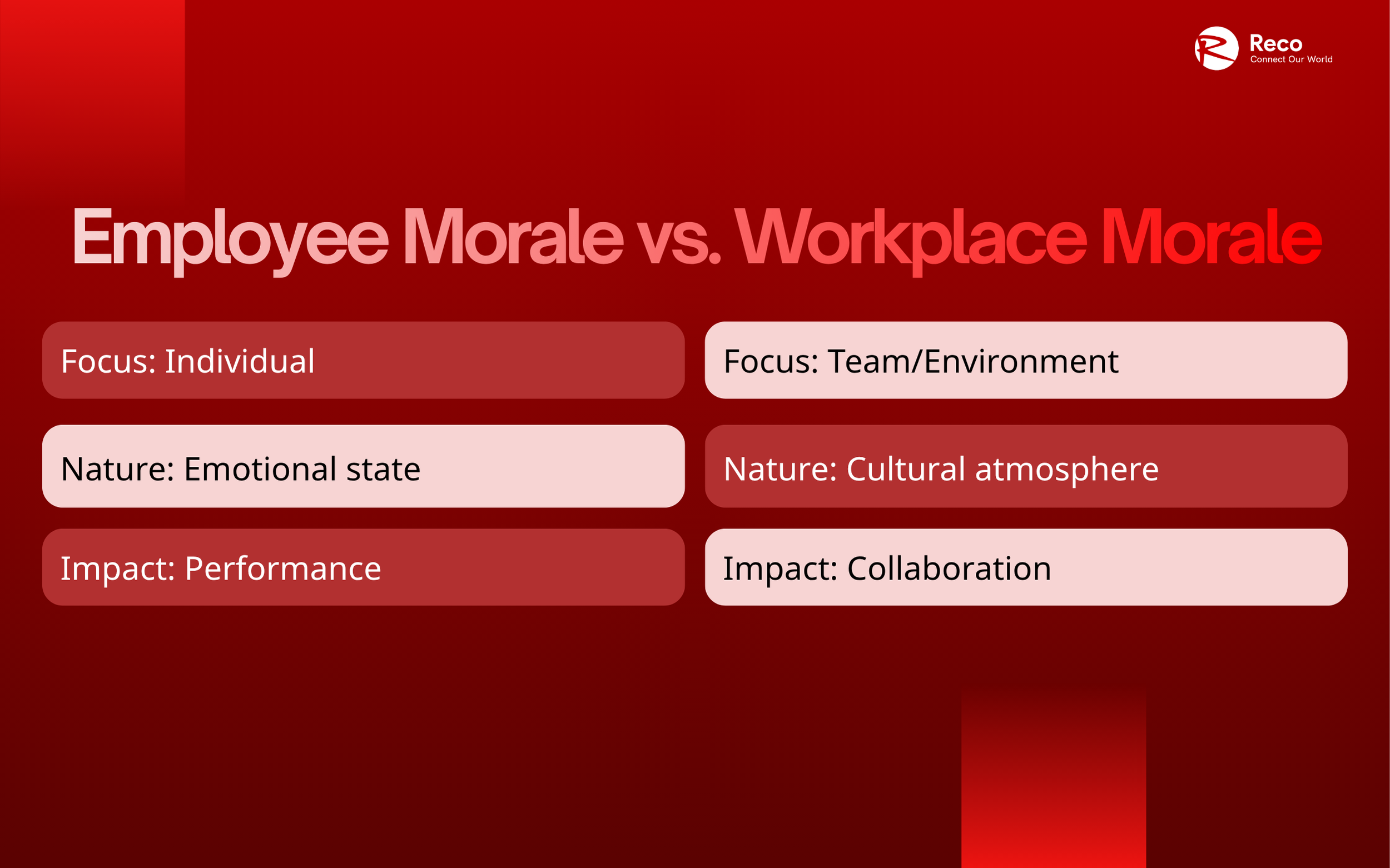
While closely related, work morale focuses more on the environment and culture, whereas employee morale reflects individual experience.
| Aspect | Work Morale | Employee Morale |
| Scope | Workplace environment | Individual mindset |
| Driver | Culture & leadership | Personal experience |
| Impact | Team performance | Individual productivity |
Improving work morale is often the most effective way to increase employee morale at scale.
2. Why Work Morale Matters
2.1. Impact on Performance and Productivity
Strong work morale creates an environment where employees naturally perform better. They are more likely to take ownership, collaborate effectively, and contribute ideas.
Research consistently shows that teams with high morale outperform others in both productivity and quality of work. This is because employees are not just completing tasks. They are engaged in the outcome.
2.2. Impact on Retention and Stability
Low work morale is one of the leading causes of employee turnover.
Employees who feel disconnected from their workplace environment are more likely to disengage and eventually leave. This creates instability, increases hiring costs, and disrupts team dynamics.
If your team is struggling with retention, you may need to look beyond hiring and consider structural solutions such as staff augmentation services to rebalance workload and expectations.
3. Common Causes of Low Work Morale
3.1. Lack of Clear Direction
When employees are unsure about priorities or expectations, their motivation declines. Confusion leads to inefficiency and frustration, both of which negatively impact work morale.
3.2. Poor Communication and Leadership
Inconsistent communication is one of the most common drivers of low morale. Employees need clarity, transparency, and regular feedback to stay engaged.
Without this, even high-performing teams can quickly lose momentum.
Build stronger work morale with the right talent — explore Reco’s hiring solutions3.3. Workload Imbalance
Overloading certain team members while others are underutilized creates tension and reduces overall morale.
In many cases, companies can address this by optimizing team structure or leveraging recruitment services in Vietnam to fill critical gaps.

4. How to Improve Workplace Morale Effectively
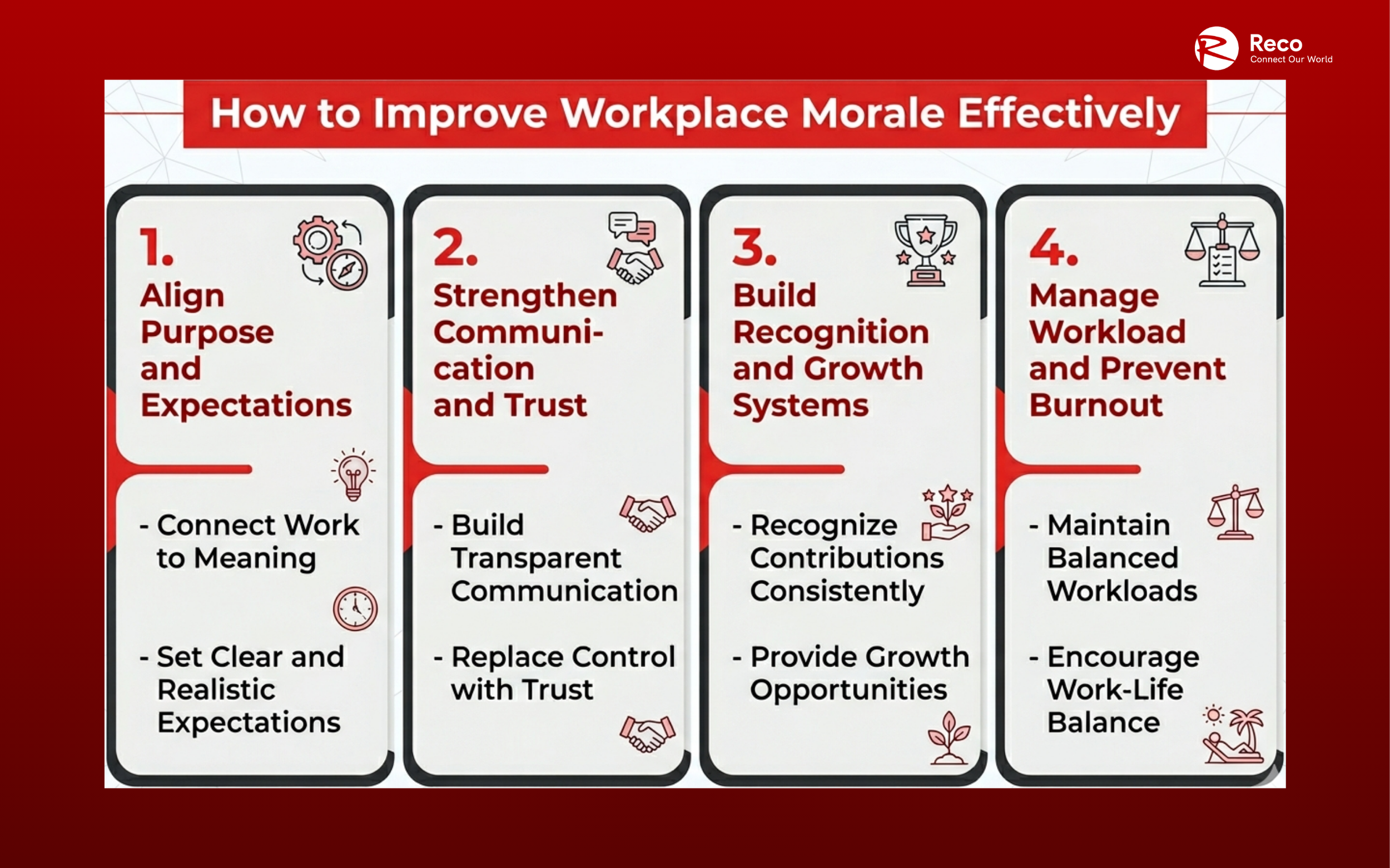
Improving work morale requires a structured approach. Instead of relying on quick fixes, companies should focus on building systems that support long-term engagement.
4.1. Align Purpose and Expectations
- Connect Work to Meaning
Employees are more motivated when they understand how their work contributes to a bigger goal. Clear context helps turn routine tasks into meaningful contributions.
- Set Clear and Realistic Expectations
Unclear expectations create stress and confusion. Defining roles, responsibilities, and success metrics helps employees stay focused and confident.
4.2. Strengthen Communication and Trust
- Build Transparent Communication
Regular updates, clear decisions, and open feedback channels are essential for improving work morale.
- Replace Control with Trust
Micromanagement reduces autonomy and damages morale. Trust-based leadership empowers employees and increases engagement.
4.3. Build Recognition and Growth Systems
- Recognize Contributions Consistently
Recognition is one of the most effective ways to increase employee morale. Employees need to feel that their efforts are noticed and appreciated.
- Provide Growth Opportunities
Career development, skill-building, and ownership opportunities help sustain motivation and improve long-term morale.
4.4. Manage Workload and Prevent Burnout
- Maintain Balanced Workloads
Ensuring fair workload distribution helps prevent burnout and keeps morale stable.
- Encourage Work-Life Balance
Supporting employees in taking breaks and managing stress is critical for maintaining healthy work morale.
5. How to Improve Morale at Work in Remote and Hybrid Teams
5.1. Build Connection Beyond Tasks
Remote work can reduce social interaction, which affects work morale. Creating informal communication spaces helps rebuild connection.
Contact Reco today to build a stronger IT team and elevate your team’s morale.5.2. Make Contributions Visible
Employees need recognition, especially in remote environments. Visibility reinforces value and engagement.
5.3. Create Consistent Team Rituals
Regular meetings, check-ins, and shared routines help maintain alignment and improve workplace morale across distributed teams.
- File name: remote-work-morale.jpg
- Alt: improving work morale in remote teams
6. How Reco Helps Improve Work Morale Through Better Team Structure
Improving work morale is not only about leadership—it also depends on having the right team structure in place.
6.1. Build Teams That Actually Fit
Hiring the wrong profiles can quickly damage morale. Through recruitment services in Vietnam, Reco helps companies build teams that align with both skill and culture.
6.2. Scale Without Overloading Teams
With staff augmentation services, companies can scale flexibly without disrupting team balance, helping maintain strong work morale.
6.3. Ensure Stability Through Payroll and Compliance
Operational issues can negatively impact morale. Reco’s Payroll services ensure stability and consistency, allowing employees to focus on their work.
7. Conclusion
Work morale is a long-term outcome of leadership, structure, and communication. Companies that actively invest in improving workplace morale will see better performance, stronger retention, and more resilient teams.

Looking to hire reliable and highly qualified tech professionals in Vietnam? Reach out to Reco Manpower today for tailored recruitment solutions that match your business needs.
FAQs
Declining work morale often shows up through reduced initiative, slower response times, and less participation in discussions. These early signals appear before performance drops and are key indicators when assessing how to improve workplace morale proactively.
When burnout has already impacted work morale, quick fixes rarely work. Companies need to reduce workload pressure, reset expectations, and rebuild trust through consistent communication to effectively improve morale at work.
The most sustainable ways to boost morale in the workplace are structural, not superficial. Clear communication, fair workload distribution, and meaningful recognition are more effective than perks in improving staff morale long term.
Poor team structure can reduce work morale by creating imbalance and misalignment. When roles are unclear or workloads are uneven, companies need to rethink how they are building staff morale through better team design and resource allocation.
To improve workplace morale in hybrid teams, companies need consistent communication frameworks and equal visibility across all employees. This helps avoid disconnection and ensures morale is not stronger in one group than another.